Kea – Tzia – Hydroussa
history
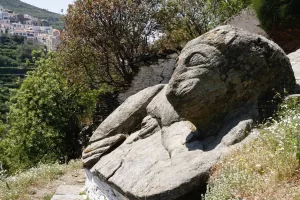
Lion of Kea (Archaic Period)
Carved around the 6th century BCE, this massive stone lion near Ioulida is shrouded in myth. Legend says it scared away water nymphs, causing a drought that only the demigod Aristeos could reverse
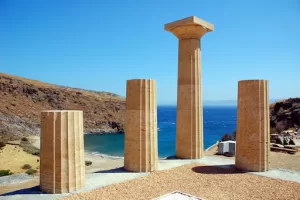
Ancient Karthea
Once one of Kea’s four city-states, Karthea thrived from the Geometric to Hellenistic periods. Its ruins include temples to Apollo and Athena, a theater, and fortified walls. Accessible only by hiking or boat, it’s a time capsule of Cycladic civilization
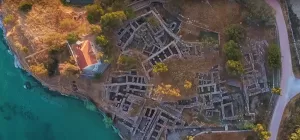
Prehistoric Settlement of Agia Irini
Located near Vourkari, this site flourished from 3300 to 1500 BCE. Excavations revealed Mycenaean-style mansions, fortifications, and 50 clay figurines—possibly priestesses or goddesses—now housed in the Archaeological Museum of Ioulida
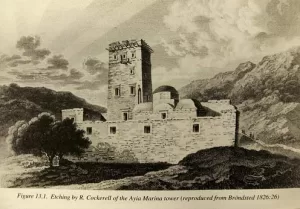
Tower of Agia Marina
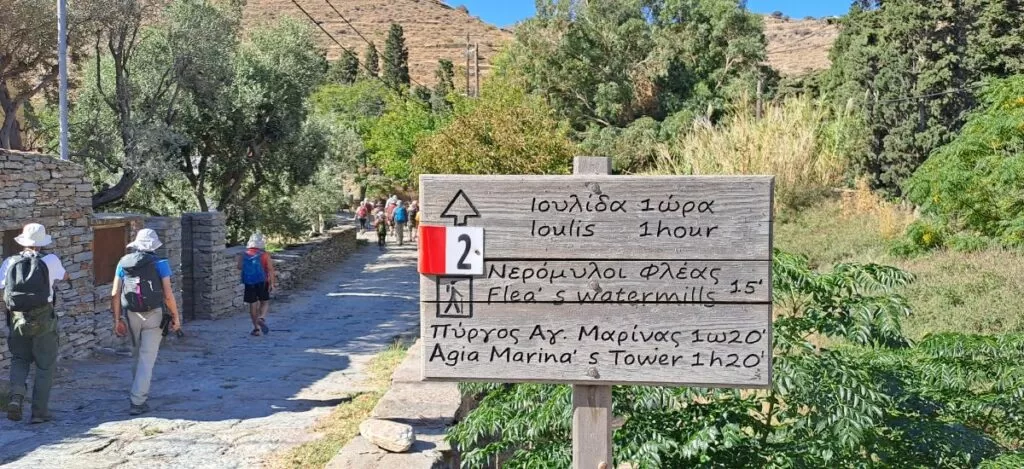
Dating to the 4th century BCE, this five-story Hellenistic tower once protected rural lands between ancient Korissia and Poiiessa. Later incorporated into a monastery, it partially collapsed in 1858 but remains a striking relic of ancient engineering
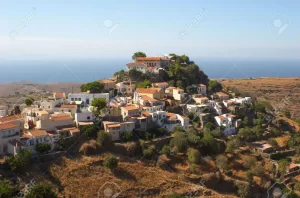
Ioulis
It’s the ancient capital of Kea, which was famed for poets like Simonides, progressive laws, and Venetian fortifications. Today, it blends myth, history, and charm in its amphitheatrical layout and museum
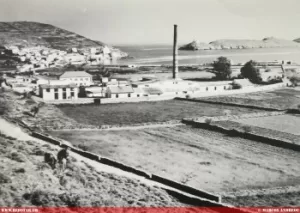
Enamel Factory in Korissia
Operating from 1927 to 1957, this was the largest enamelware factory in the Mediterranean. It produced household goods and military supplies, fueling Kea’s economy. Today, its towering chimney and preserved machinery tell the story of industrial ambition